The Physics of Milk Frothing

A scientific exploration of the technical aspects behind perfect espresso milk foam

Introduction

Milk frothing is a fundamental technique in the preparation of espresso-based beverages such as lattes, cappuccinos, and macchiatos. While it may appear simple, the process involves complex physical and chemical interactions that transform ordinary milk into a velvety, creamy microfoam that enhances both the texture and flavor of coffee drinks.

This website explores the technical aspects of milk frothing, focusing on the physics and chemistry that make it possible. From milk composition to protein behavior, temperature effects to bubble formation, we'll dive deep into the science behind perfect milk foam.

Milk Frothing Animation

The Physics of Milk Frothing

The Physics of Milk Frothing

A scientific exploration of the technical aspects behind perfect espresso milk foam

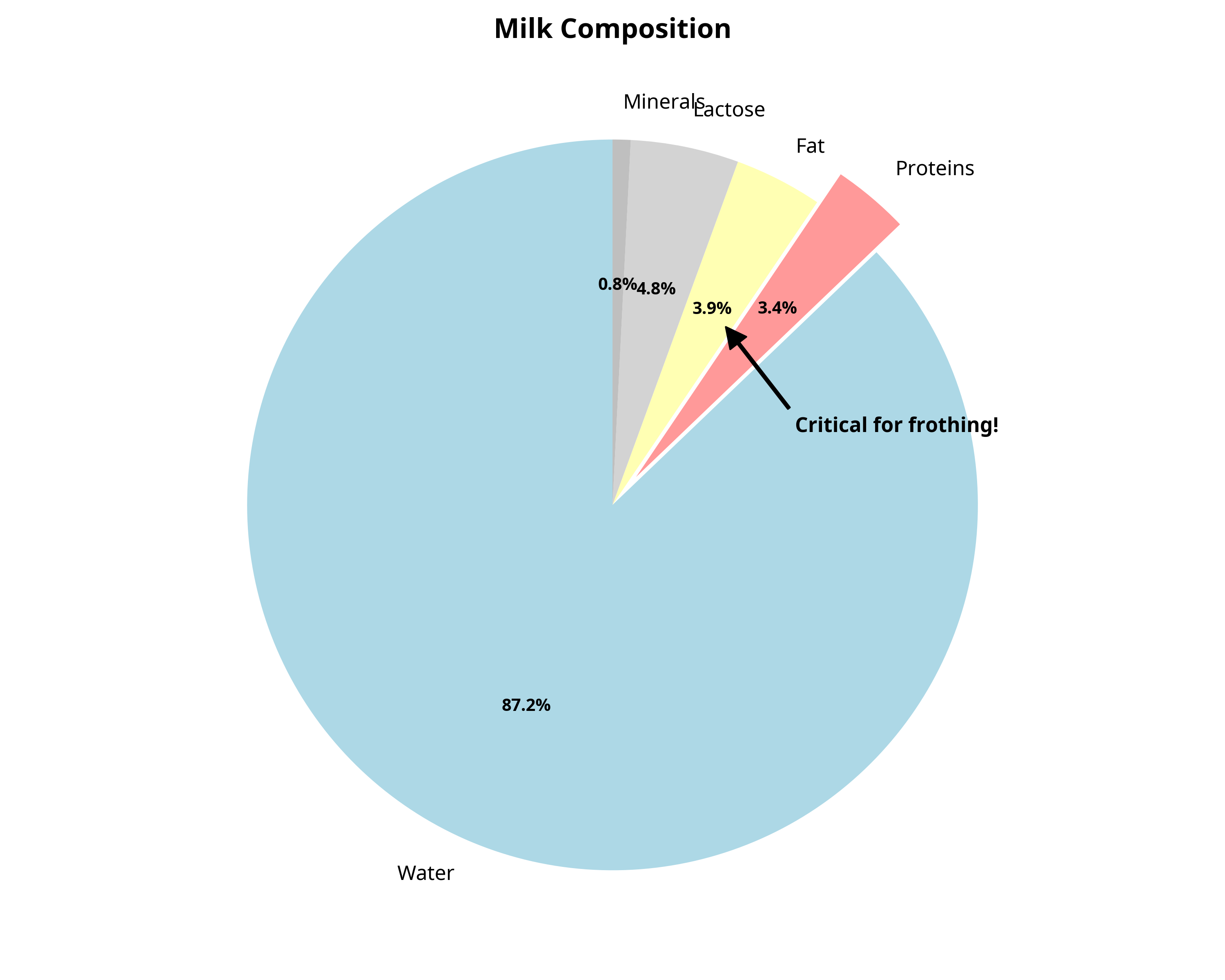
Milk Composition

Milk Composition

Understanding milk's components is essential to mastering frothing. Proteins (3.4%) are critical for foam formation and stability.

Protein Behavior

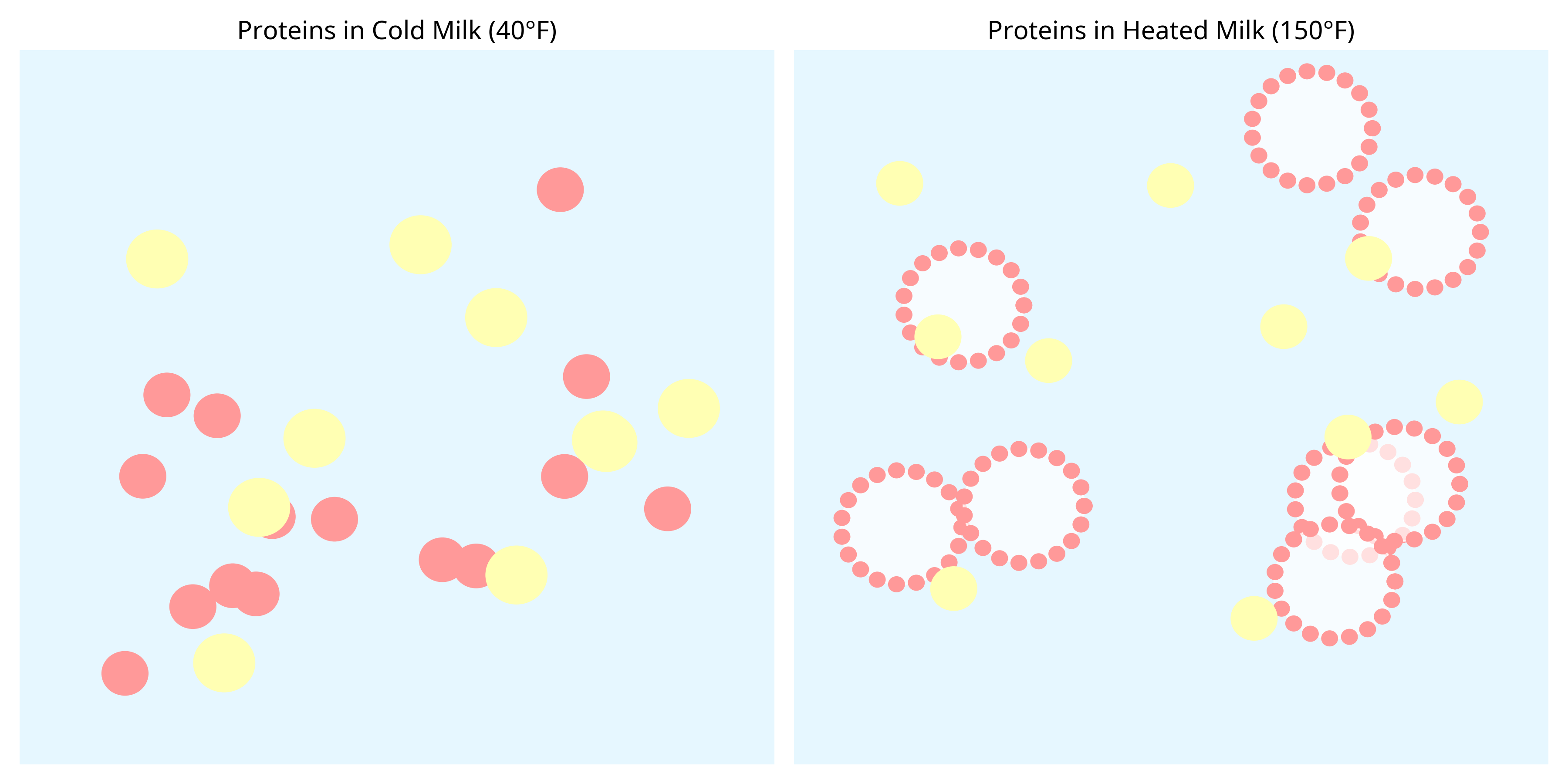
Protein Behavior During Heating

As milk heats, proteins unwind and reorient around air bubbles, creating a protective layer that stabilizes the foam.

Steam Wand Positioning

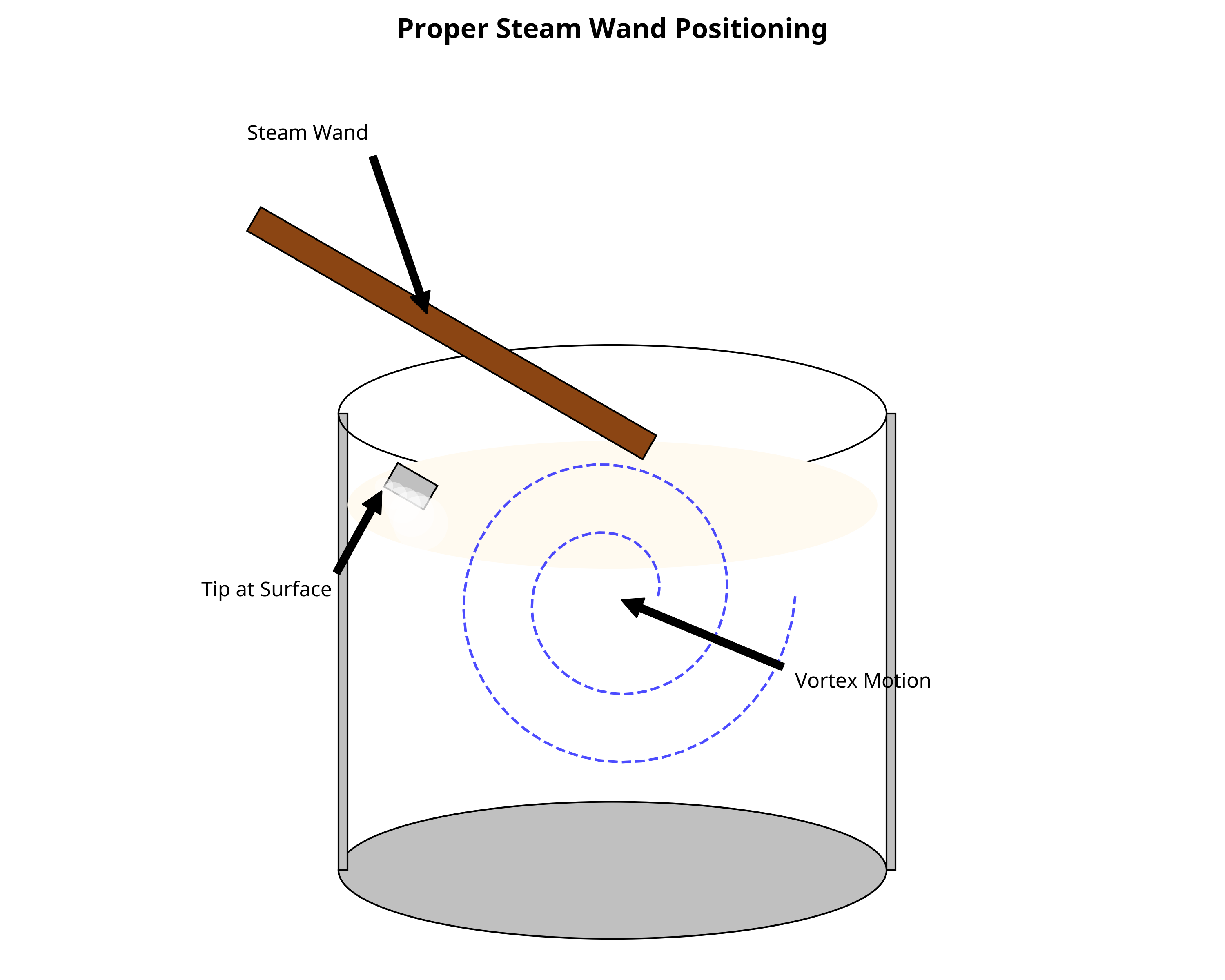
Proper Steam Wand Positioning

Correct positioning creates a vortex motion that distributes air evenly throughout the milk.

Temperature Effects

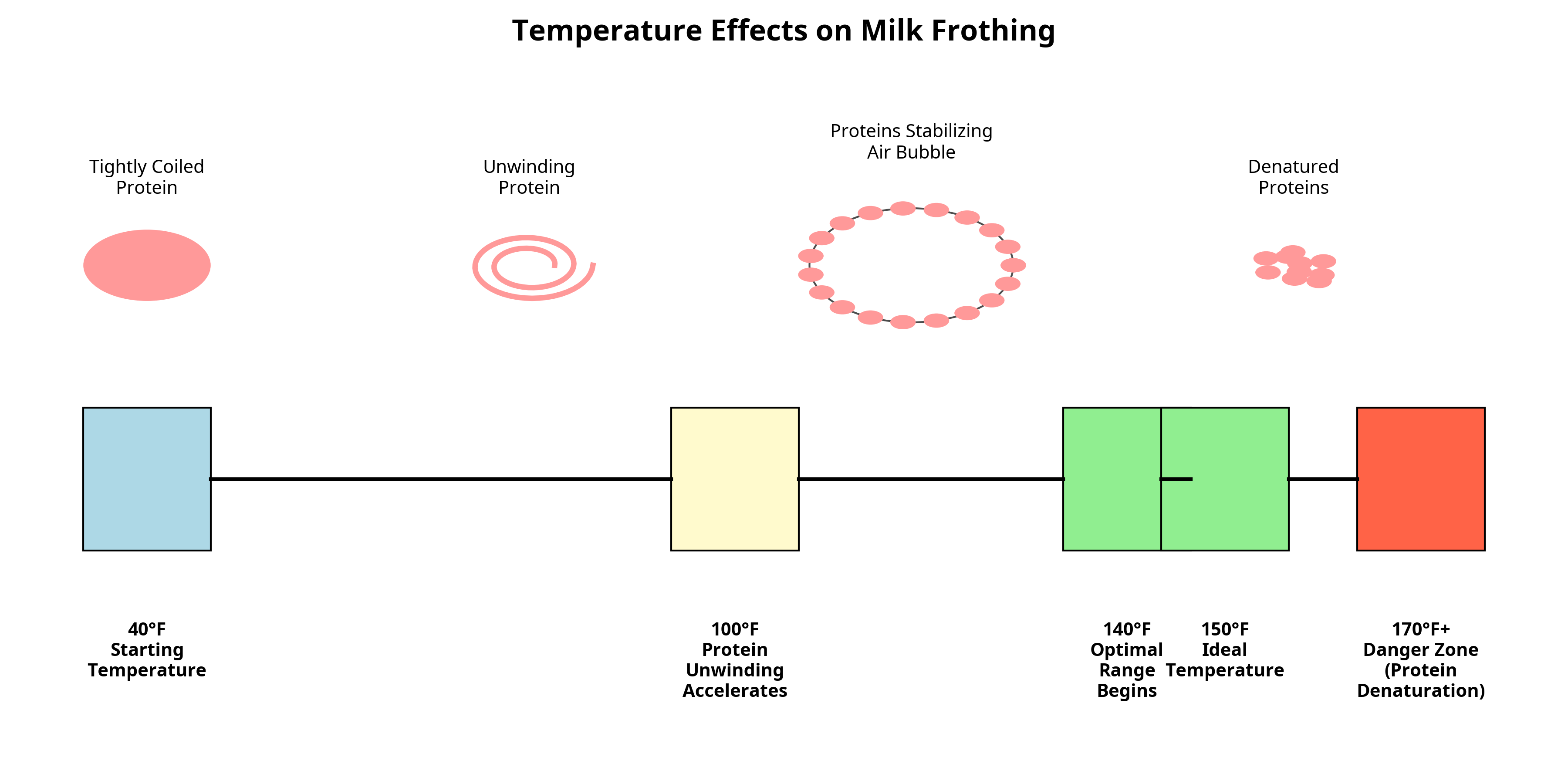
Temperature Effects on Milk Frothing

The optimal temperature range is 140-150°F (60-65°C). Above 170°F, proteins denature and foam collapses.

Microfoam vs Macrofoam

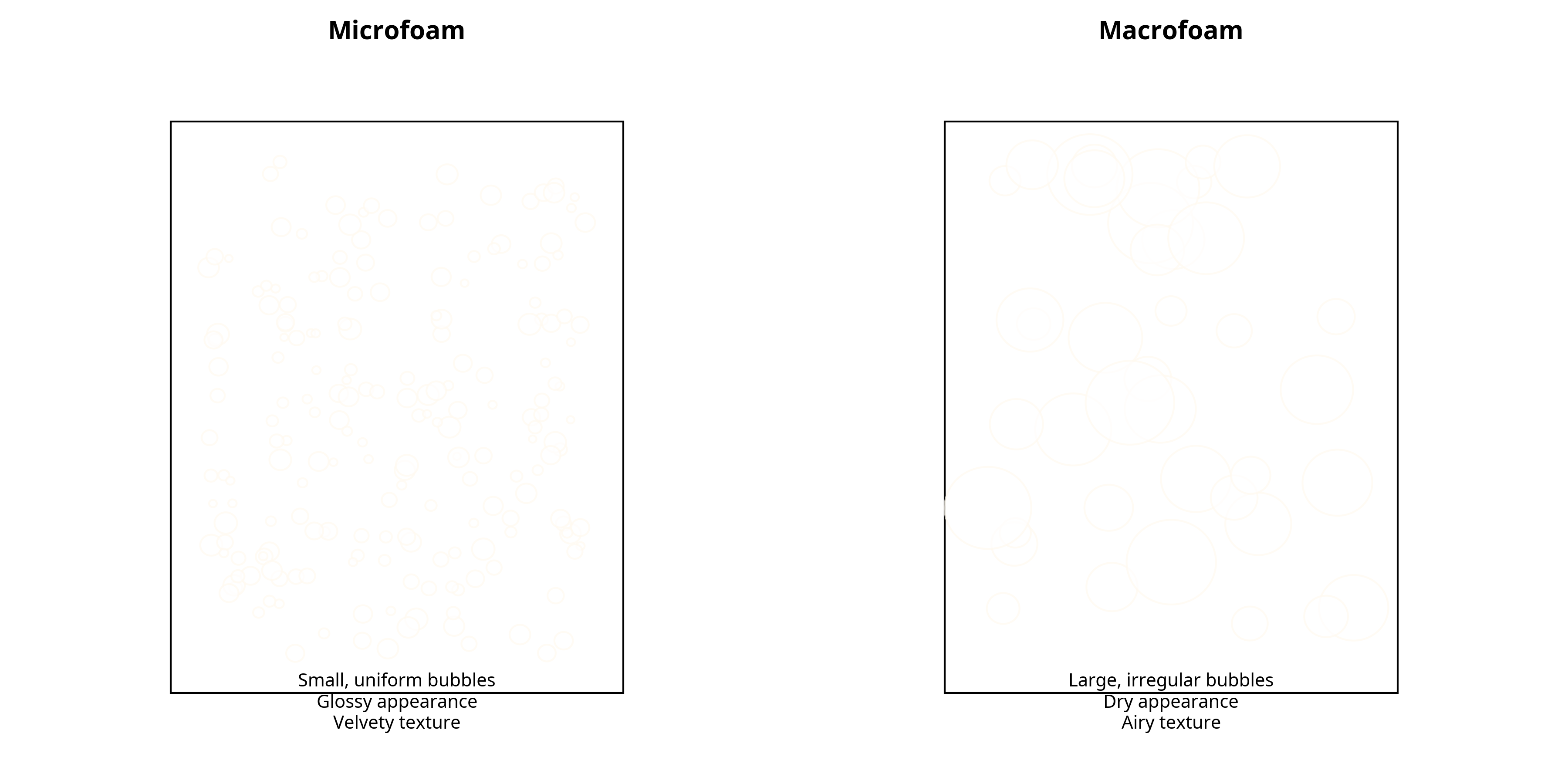
Microfoam vs. Macrofoam

Microfoam has small, uniform bubbles ideal for latte art, while macrofoam has larger, irregular bubbles.

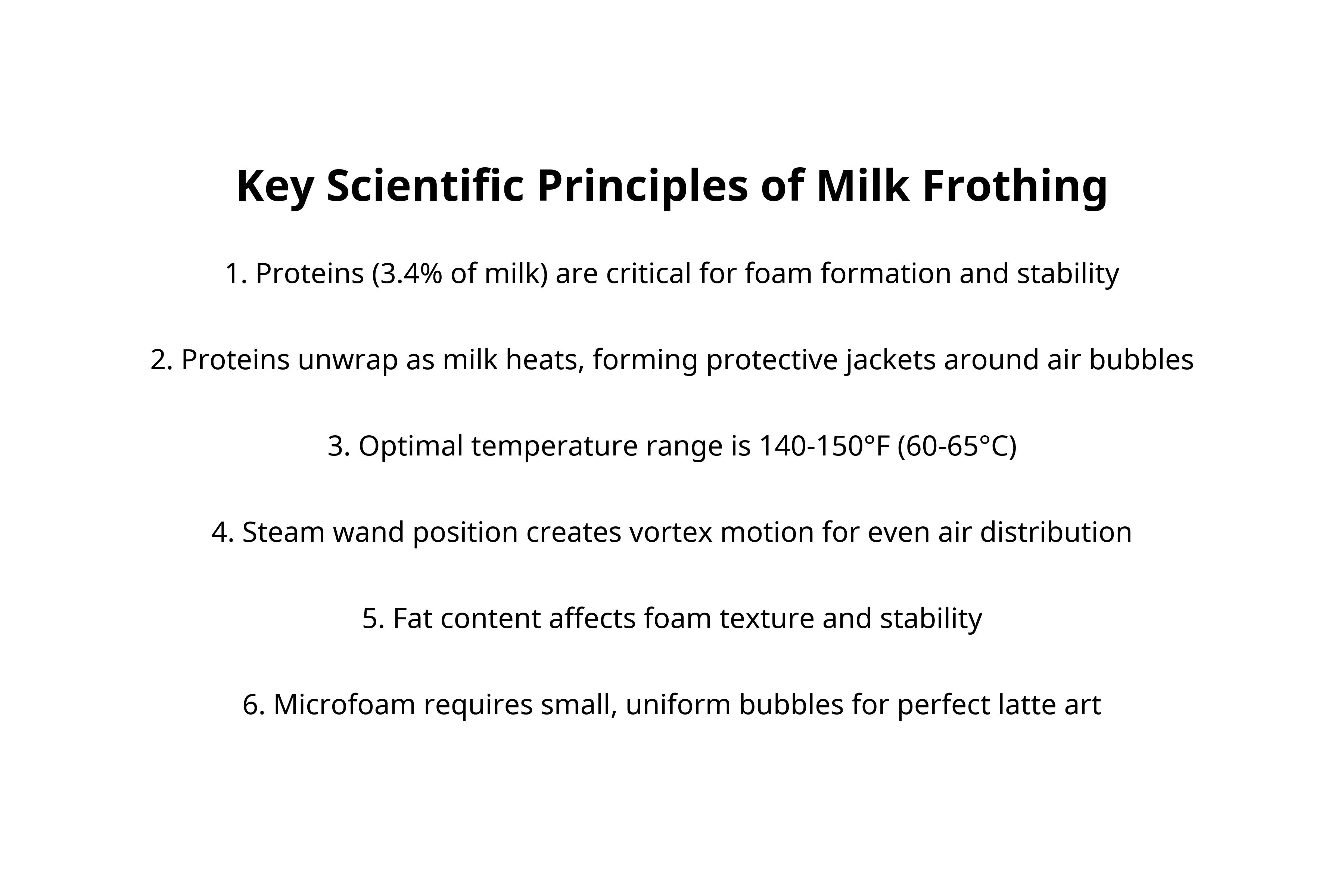
Key Scientific Principles

Key Scientific Principles

Understanding these principles allows baristas to consistently create perfect microfoam.

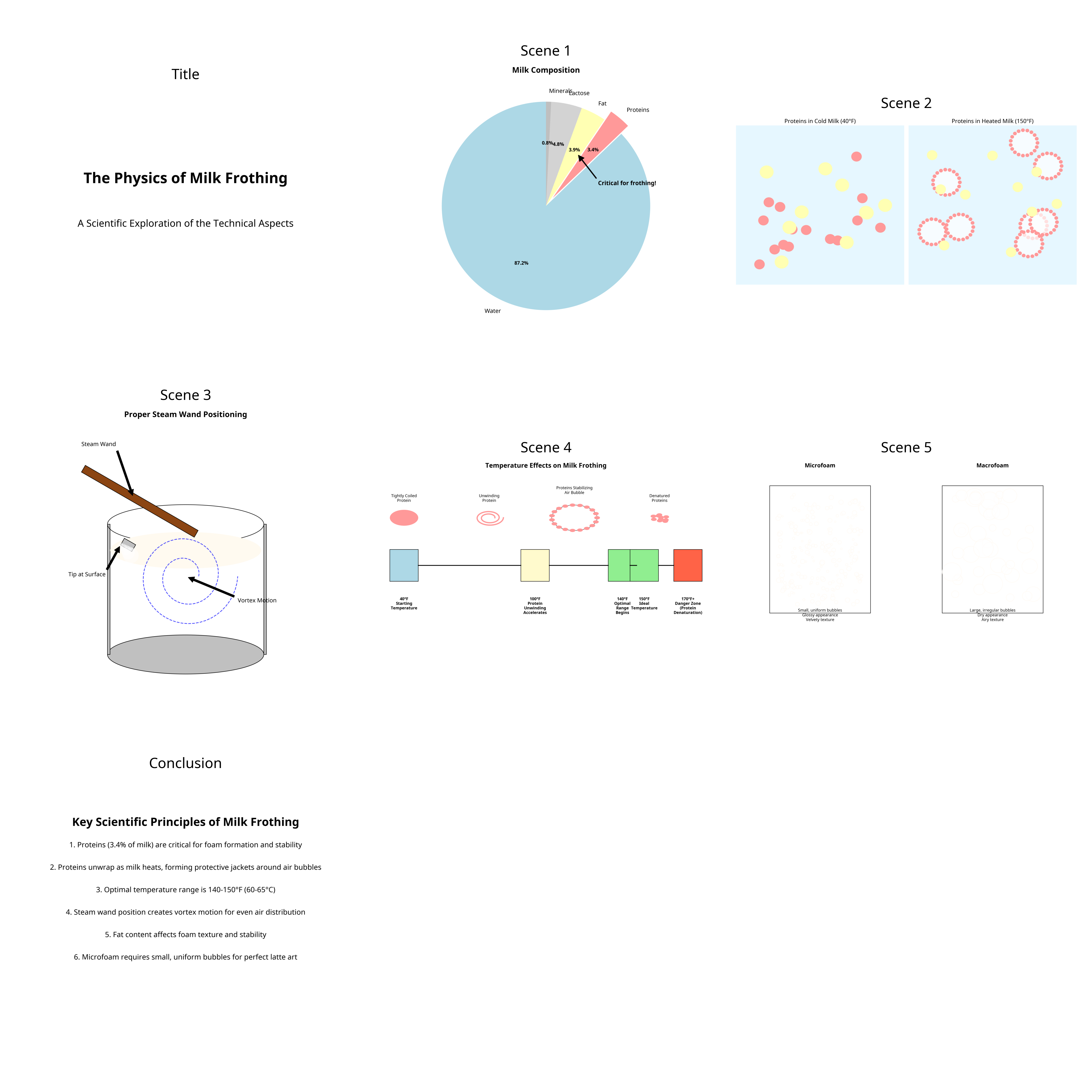
Animation Overview

Milk Frothing Animation Overview

Milk Composition: The Foundation of Frothing

Understanding milk frothing begins with understanding milk's composition. Milk is a complex biological fluid with several key components that affect its frothing properties:

Water (87.5%)

Water serves as the primary medium in which all other components are dissolved or suspended. It accounts for approximately 87.5% of milk's volume (range: 85.5-89.5%).

Proteins (3.4%)

Proteins are crucial for foam formation and stability. They account for about 3.4% of milk's volume (range: 2.9-5.0%) and can be divided into two main categories:

  1. Caseins (80% of total protein): These proteins form spherical micelles that are dispersed in the water phase of milk. During steaming, the injected air bubbles disrupt these micelles.
  2. Whey Proteins (20% of total protein): These include:
    • β-lactoglobulin (predominant milk serum protein)
    • α-lactalbumin
    • Immunoglobulins
    • Serum lactalbumin

Proteins play a critical role in foam formation because of their amphiphilic nature—they have both hydrophobic (water-repellent) and hydrophilic (water-attracted) sides. This dual nature allows them to form a protective layer around air bubbles, stabilizing the foam.

Fat (3.9%)

Fat accounts for approximately 3.9% of milk's volume (range: 2.5-6.0%). In non-homogenized milk, fats float around in various sized globules, often combining into a fat cap at the top. Homogenization breaks up these globules into uniform droplets and disperses them evenly throughout the milk.

Fat has a complex relationship with foam formation. While it can help create a creamier texture, it can also destabilize foam. The hydrophobic part of milk protein is as likely to attach to fat as it is to air, which means more fat in milk results in less air it can hold.

Lactose (4.8%)

Lactose is milk's primary carbohydrate, making up around 4.8% of its volume (range: 3.6-5.5%). It contributes to milk's sweet flavor when fresh and sour flavor when old (as bacteria breaks down lactose into lactic acid). When milk is heated, lactose enhances the perceived sweetness as longer chain carbohydrates break down into simpler sugars.

Minerals (0.8%)

Minerals such as calcium and magnesium make up about 0.8% of milk's volume (range: 0.6-9.0%). While they have limited direct effect on frothing qualities, they contribute to milk's overall composition and behavior.
The Physics of Steam Injection

The steam wand on an espresso machine is the primary tool for creating milk foam. Understanding the physics of how it works is essential to mastering milk frothing:

Steam Properties

Steam from an espresso machine is hot water vapor at approximately 250-255°F (121-124°C). When this high-temperature steam contacts cold milk (typically around 40°F or 4°C), it provides both the energy (heat) and gas (as it condenses) needed for foam formation.

Steam Wand Mechanics

The steam wand produces jets of steam through small holes in the steam tip. These jets act like tiny, fierce whisks when properly positioned. The position of the steam wand is critical:

  1. Surface Positioning: When the steam tip is at the milk's surface, it breaks the surface tension and folds air into the milk. This process is sometimes called "stretching" or "aerating" the milk.
  2. Submerged Positioning: When the steam tip is fully submerged, it heats the milk without introducing air. This is used to increase temperature without creating additional foam.
  3. Optimal Positioning: The ideal technique involves placing the steam wand in the bottom corner of the pitcher, with just the steam tip in the milk, and having the wand pass through the spout of the milk jug for stability.

Vortex Formation

Proper positioning creates a vortex or whirlpool effect in the milk. This circular motion is crucial because:

  1. It distributes air bubbles evenly throughout the milk
  2. It prevents large, unwieldy bubbles from forming
  3. It creates a consistent texture throughout the milk
  4. It helps incorporate the foam that naturally separates from the liquid phase

The Physics of Sound During Milk Frothing

The sounds produced during milk frothing provide important auditory feedback about the process:

Causes of Sound

  1. Initial Screaming: When a steam wand is first placed in cold milk, it produces a loud screaming sound caused by fast-moving steam hitting stationary cold milk.
  2. Cavitation: The noise most likely comes from a phenomenon known as "cavitation" - the collapse of tiny steam bubbles when the steam condenses, dramatically shrinking and producing pressure waves at the microscopic scale.
  3. Protein Interaction: High protein content in milk contributes to sound production. As protein foam forms around the steam wand, it can partially block the orifice, creating a whistling noise.

Sound as Feedback

Experienced baristas use sound as a guide:

  1. The "kisses" or light hissing sounds indicate the correct amount of air is being incorporated
  2. No audible cues suggest the wand is too deep (lower the jug slightly)
  3. Loud sounds indicate too many large bubbles are forming (raise the jug slightly)
  4. A whirlpool action reduces noise by distributing steam more evenly

The Chemistry of Foam Formation

The formation of milk foam involves several chemical processes that occur simultaneously during steaming:

Protein Denaturation and Reorientation

In cold milk, proteins exist in tightly coiled bundles. As milk warms, these proteins begin to unwind (denature) and reorient themselves:

  1. The hydrophobic (water-repellent) portions of the proteins orient toward the air bubbles
  2. The hydrophilic (water-attracted) portions orient toward the water in the milk
  3. This creates a protective "jacket" around air bubbles, stabilizing them

This protein reorientation is temperature-dependent. If milk gets too hot (above 170°F/77°C), the proteins completely break down, releasing the trapped air and ruining the foam.

Bubble Formation and Stability

Air bubbles in milk foam are metastable structures. Their formation and stability depend on several factors:

  1. Initial Formation: Air is introduced by the steam wand breaking the milk's surface
  2. Stabilization: Proteins (primarily β-casein initially, then β-lactoglobulin at higher temperatures) wrap around the air bubbles
  3. Destabilization Factors:
    • Gravity (causing liquid drainage)
    • Surface tension (causing bubbles to combine)
    • Protein denaturation (if overheated)
    • Fat interference (competing with proteins for the air-water interface)

Fat's Dual Role

Fat plays a complex role in foam formation:

  1. Destabilizing Effect: Fat can compete with proteins for the air-water interface. The hydrophobic part of milk protein is as likely to attach to fat as it is to air.
  2. Texture Enhancement: Despite its destabilizing effect, fat contributes to a creamier, more flavorful foam. Whole milk foam is an emulsification of air, water, and fat that creates a velvety texture.
  3. Temperature Sensitivity: The denaturation of milk fat occurs around 40°C (104°F), so milk at higher temperatures is less affected by fat's destabilizing properties.

Microfoam vs. Macrofoam

The quality and characteristics of milk foam can vary significantly, with two main categories recognized:

Microfoam

Microfoam is characterized by:

Macrofoam (Dry Foam)

Macrofoam is characterized by:

Temperature Effects on Milk Frothing

Temperature plays a critical role in milk frothing, affecting everything from protein behavior to foam stability:

Foamability and Temperature Relationship

Several studies have confirmed that the foamability of pasteurized whole milk, measured by the volume of foam produced, reaches a minimum at 25°C (77°F). For raw milk, this minimum is around 35°C (95°F).

This dip in foamability occurs due to fat globules consisting of both solid and liquid phases at this temperature. Solid fat crystals in a globule may penetrate the film separating them from the surrounding air, causing spreading of the membrane material which is then adsorbed onto air bubbles.

Optimal Temperature Ranges

  1. Aeration Phase: Air should be introduced before milk reaches room temperature (100°F/38°C), as it becomes significantly harder to incorporate air after this point.
  2. Final Temperature: The optimal final temperature for steam frothing is in the range of 50-60°C (122-140°F).
  3. Temperature Limits: If milk is heated above 82°C (180°F), it becomes scalded, and microfoam cannot exist due to the missing tertiary structure in the protein.

Foam Stability and Temperature

For pasteurized whole milk, stability increases with temperature up to about 40°C (104°F), then rises steeply until 60°C (140°F), where it starts steadily decreasing.

Different milk types have different optimal temperature ranges:

Milk Type Effects on Frothing

Different types of milk and milk alternatives have varying frothing properties due to their composition:

Dairy Milk Variations

  1. Whole Milk (3.2% protein): Produces creamier, more flavorful foam with smaller, more homogeneous bubbles. The higher fat content creates a velvety texture but slightly less volume.
  2. Skim Milk (3.4% protein): Yields the most stable and stiff foam but is difficult to pour (tends to "plop"). Creates more volume but larger air bubbles.
  3. 2% Milk (3.3% protein): Offers a middle ground between whole and skim milk properties.

Non-Dairy Alternatives

  1. Soy Milk (2.7% protein): Generally froths well due to its protein content, though results can vary by brand.
  2. Almond Milk (0.4% protein): Despite low protein content, can hold a light and long-lasting foam. Commercial barista versions often contain additives to improve frothing.
  3. Oat Milk: Increasingly popular for its creamy texture and frothing capabilities, especially barista-specific formulations.

Practical Implications for Baristas

Understanding the science of milk frothing leads to several practical techniques for achieving optimal results:

Optimal Technique

  1. Wand Positioning: Place the steam wand in the bottom right (or left) corner of the jug, aiming it toward the side to create a vortex motion.
  2. Aeration Timing: Introduce air only at the beginning of the process, before the milk reaches 100°F (38°C).
  3. Depth Control: Add just the steam tip to the milk - too deep results in flat milk, too shallow creates too many bubbles.
  4. Stability: Having the wand pass through the spout of the milk jug helps maintain stability during steaming.
  5. Holding Still: Maintaining the correct position throughout the process is crucial - small changes can alter the effectiveness of the vortex.

Temperature Management

  1. Monitoring: Use a thermometer until you develop the ability to judge temperature by touch (pitcher becomes too hot to hold comfortably at around 140°F).
  2. Stopping Point: Stop steaming before reaching the target temperature (around 5-10°F lower) as the temperature will continue to rise briefly.
  3. Avoiding Scalding: Never exceed 170°F (77°C) to prevent protein denaturation.

Post-Steaming Techniques

  1. Tapping: Tap the pitcher on the counter to remove any large bubbles.
  2. Swirling: Swirl the milk to reincorporate any separated foam and maintain a consistent texture.
  3. Immediate Use: Use the microfoam immediately, as it will begin to separate over time (though high-quality microfoam can maintain its structure for several minutes).

Conclusion

Milk frothing for espresso is a fascinating intersection of physics and chemistry. The process involves complex interactions between proteins, fats, and air bubbles, all influenced by temperature and mechanical forces. By understanding these technical aspects, baristas can consistently create the perfect microfoam for espresso-based beverages, enhancing both their visual appeal and taste experience.

The science behind milk frothing continues to evolve, with ongoing research into the molecular behavior of different milk components and how they interact during the steaming process. This knowledge not only helps improve traditional dairy milk frothing but also informs the development of better non-dairy alternatives that can produce comparable results.

Mastering milk frothing requires both technical knowledge and practical experience. By applying the scientific principles outlined on this website, anyone can improve their milk steaming technique and create beautiful, delicious espresso beverages with perfect microfoam.